- weight
- 0.90 g
- sun
- 1.4× wider
- sky
- warm white
Illustration computed from this world’s measured and derived values, not a photograph.
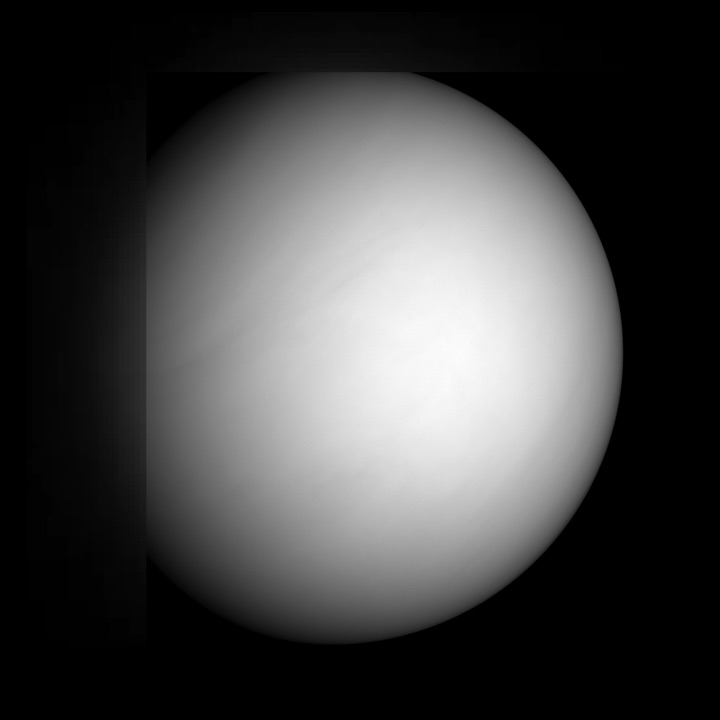
Venus
Venus is a rocky world in our own solar system.
Standing on Venus, you would weigh about 10% less than you do on Earth. From here the Sun looks 1.4× wider than it does from Earth, bathing the surface in warm white light. A year passes in just 225 days, and at an estimated 464°C (867°F) it is furnace-hot.
How closely this world matches Earth in size and warmth, from 0 to 1 (Earth = 1.0). Computed by gravityfinder. See every world ranked →
What these mean: surface gravity · tidal locking · equilibrium temperature · Earth similarity
If your children grew up herea playful thought experiment
Gravity close to Earth's, at 0.90 times. A child would grow up much as they would back home.
A playful thought experiment from this world’s gravity, not a prediction about any real person. No human has ever grown up off Earth, so no one truly knows; the direction (taller in low gravity, shorter and stockier in high) follows how growing bodies respond to weight.
Hear how a voice sounds herea computed acoustic demoEXPERIMENTAL · just for fun
Your voice would sound high and thin, almost cartoonish.
Sound travels at about 427 metres per second here, roughly 25% faster than on Earth, so your voice would sound high and thin, almost cartoonish. The dense air would also carry every word loud and far.
A real voice sample, pitch-shifted (tempo held constant) to suggest the acoustics: a playful approximation, not a precise simulation. Voice: Lingua Libre / Vealhurl, CC BY-SA 4.0.
- !A runaway greenhouse holds the surface near 465°C, hot enough to melt lead, day and night.
- !The air crushes down at about 90 times Earth's pressure, like being 900 metres underwater.
- !Perpetual clouds of sulfuric acid, and not a trace of breathable oxygen.
A playful read of Venus’s measured and computed values, not a real advisory.
Venus is in our own solar system. It orbits about 0.72 AU from the Sun, so sunlight reaches it in roughly 6 minutes. From Earth it is about 0.28 AU away at closest, and a spacecraft is far slower:
How long to get there with today’s craftCALCULATED
At the speed of the Parker Solar Probe, the fastest craft ever built, the trip to Venus would take about 2 days; a real mission took early probes 3 to 5 months.
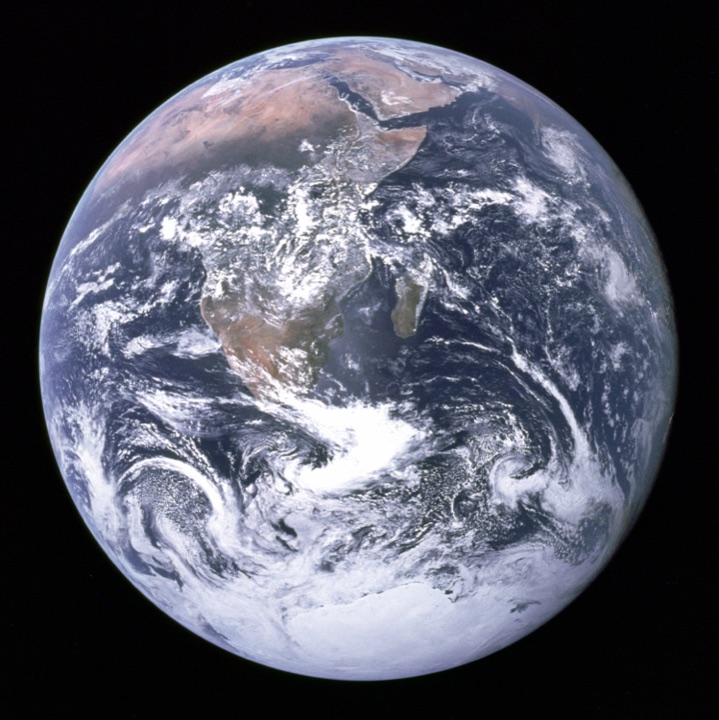
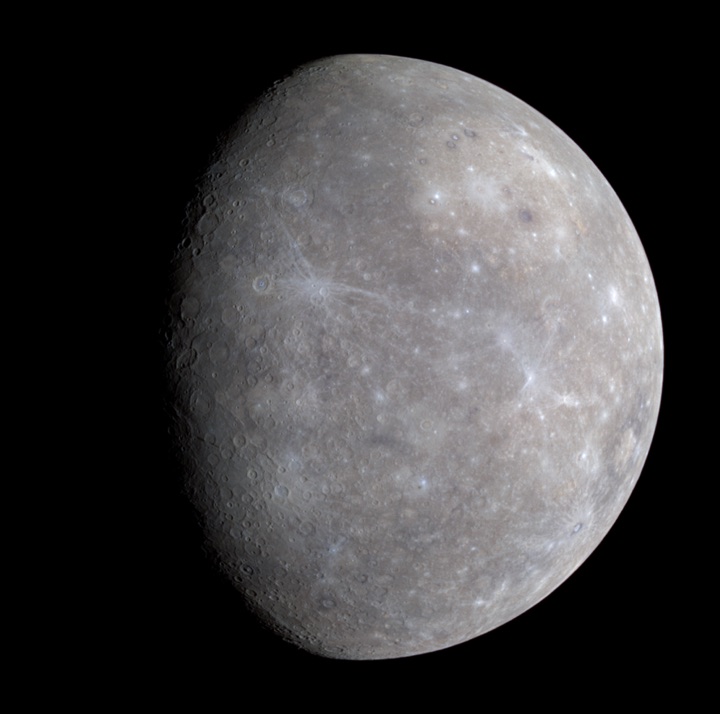
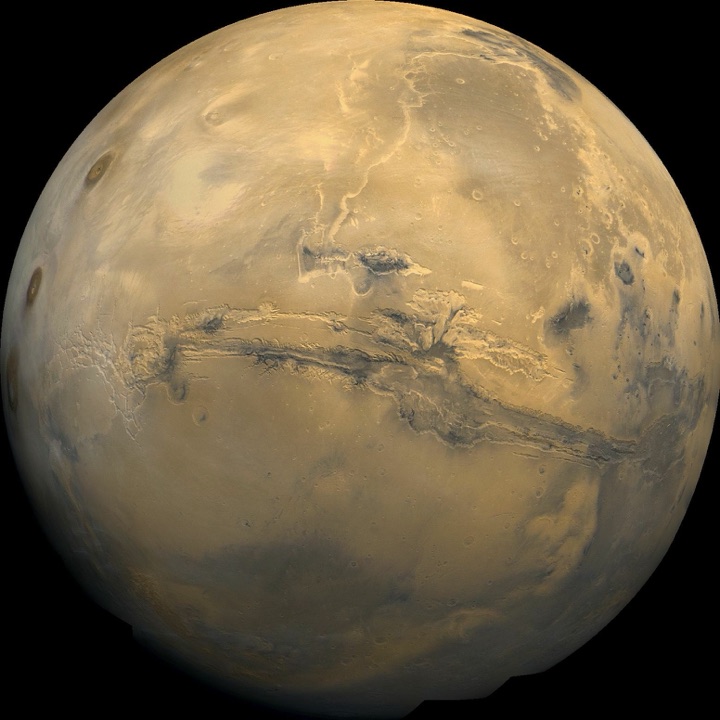
Zoom out: star → system → (soon) galaxy arm, host black hole, and a real image of the host galaxy.
Matched telescope & eyepiece recommendations are coming. Any product links will carry a clear affiliate disclosure.
What is the gravity on Venus?
Venus's surface gravity is about 0.90 times Earth's.
How much would you weigh on Venus?
Someone who weighs 150 pounds on Earth would weigh about 136 pounds on Venus.
How hot is Venus?
Venus's equilibrium temperature, the balance it reaches from its star's light alone before any greenhouse warming, is about 464°C (867°F).
How long is a year on Venus?
Venus completes one orbit of the Sun in 225 days.
The portrait of Venus is a real photograph (NASA/JHUAPL/Carnegie Institution of Washington (MESSENGER); composite by CactiStaccingCrane, CC0). The "stand here" scene and the size comparison are computed illustrations, not photographs.