Io
Io is a rocky world in our own solar system.
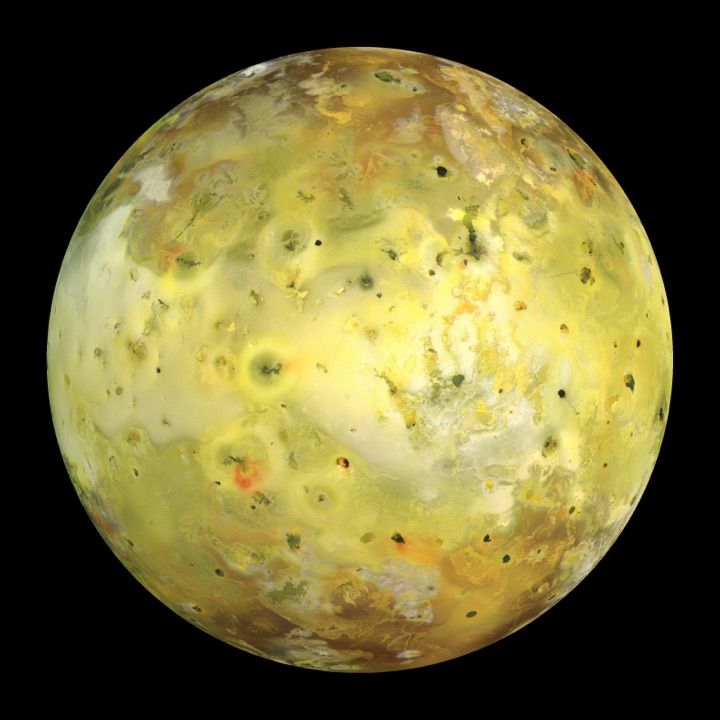
Imagine being here

Hear your voice here
You would hear nothing at all. With essentially no atmosphere, there is no medium to carry sound. You could shout into someone's helmet from an inch away and they would hear nothing: space is silent.
Your jump here
You would hang in the air for 3.5 s, against 0.6 s on Earth.
Standing on Io, you would weigh about 82% less than you do on Earth. From here the Sun looks 0.19× as wide as it does from Earth, bathing the surface in warm white light. It circles Jupiter every 1.8 days, and at a measured -163°C (-262°F) it is colder than almost anywhere in the solar system.
What we know
- Caution: The most volcanically active world in the solar system, its surface repaved by constant eruptions.
- Caution: It sits deep inside Jupiter's radiation belts, which would be lethal within hours.
- Caution: Only a wisp of sulfur-dioxide gas, nothing you could breathe.
At human scale
How closely this world matches Earth in size and warmth, from 0 to 1 (Earth = 1.0). Computed by gravityfinder. See every world ranked →
What these mean: surface gravity · tidal locking · equilibrium temperature · Earth similarity
An imaginative extra
If your children grew up here
A fictional scenario about gravity alone. Nobody has grown up off Earth, so you set the assumption and see what follows.
Lower gravity puts less load on a growing skeleton and heart. Astronauts' bones thin within months in orbit; what a whole childhood would do is unknown.
A playful thought experiment from this world’s gravity, not a prediction about any real person. No human has ever grown up off Earth, so no one truly knows; the direction (taller in low gravity, shorter and stockier in high) follows how growing bodies respond to weight.
How long would it take to get here?
Measured straight across the gap between Earth's orbit and Io's, at a steady speed. Real trips curve and take longer.
Io is in our own solar system. It orbits about 5.20 AU from the Sun, so sunlight reaches it in roughly 43 minutes. From Earth it is about 4.20 AU away at closest, and a spacecraft is far slower.
| How | Travel time | Traveller’s lifespan during the journey |
|---|---|---|
| Actual missions | ||
| Real mission timingCurved paths, today’s rockets | 5 years | Took the Juno probe just under 5 years to reach Jupiter's neighborhood |
| Speed comparisons · straight line, constant speed | ||
| At Parker Solar Probe's peak speed692,000 km/h, reached only while diving past the Sun | 38 days | Arrives the same age |
| At jet-airliner speed900 km/h | 80 years | Dies of old age about 69% of the way there; cryo-sleep could get them there |
| At the speed of lightNothing can go faster | 35 min | Arrives the same age |
| Science fiction | ||
| Warp 101,000 times light speed (fiction) | 2 sec | Arrives the same age |
| Folding spacetimeInstant, plus 1 hour of paperwork (fiction) | 1 hour | No time passes for the traveller |
At the speed of the Parker Solar Probe, the fastest craft ever built, the trip to Io would take about 38 days; a real mission took the Juno probe just under 5 years to reach Jupiter's neighborhood.
Do not travel
A playful read of Io’s measured and computed values, not a real advisory. Its reasons are listed above, under What we know.
Can you see it tonight?
Gear bridge
Matched telescope & eyepiece recommendations are coming. Any product links will carry a clear affiliate disclosure.
Questions about Io
What is the gravity on Io?
Io's surface gravity is about 0.18 times Earth's.
How much would you weigh on Io?
Someone who weighs 150 pounds on Earth would weigh about 27 pounds on Io.
How hot is Io?
Io's measured mean surface temperature is about -163°C (-262°F).
How long does Io take to orbit Jupiter?
Io circles Jupiter once every 1.8 days, and travels around the Sun together with Jupiter.
Where do these numbers come from?
| Mass | Measured | NASA planetary fact sheets |
| Diameter | Measured | NASA planetary fact sheets |
| Gravity | Calculated | g = mass ÷ radius², by gravityfinder |
| Temperature | Measured | NASA planetary fact sheets |
| Globe and scene | Illustration | Photograph · NASA/JPL/University of Arizona · Public domain. The scene is computed, not a photograph. |
Where will you go next?
Explore from here: roam the neighborhood.
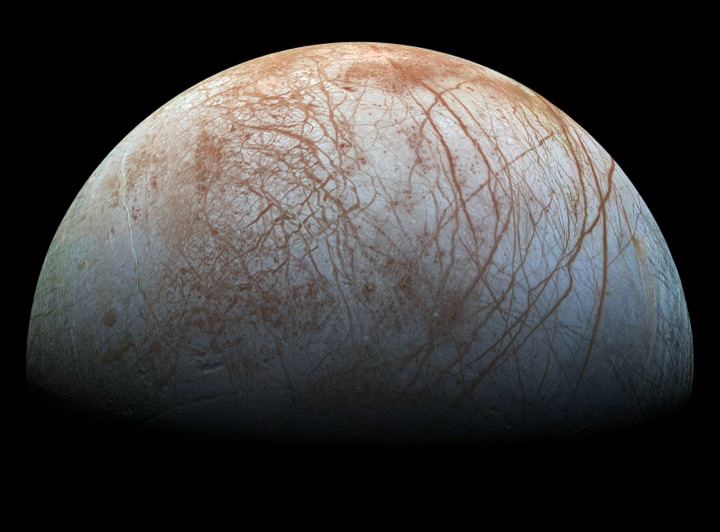
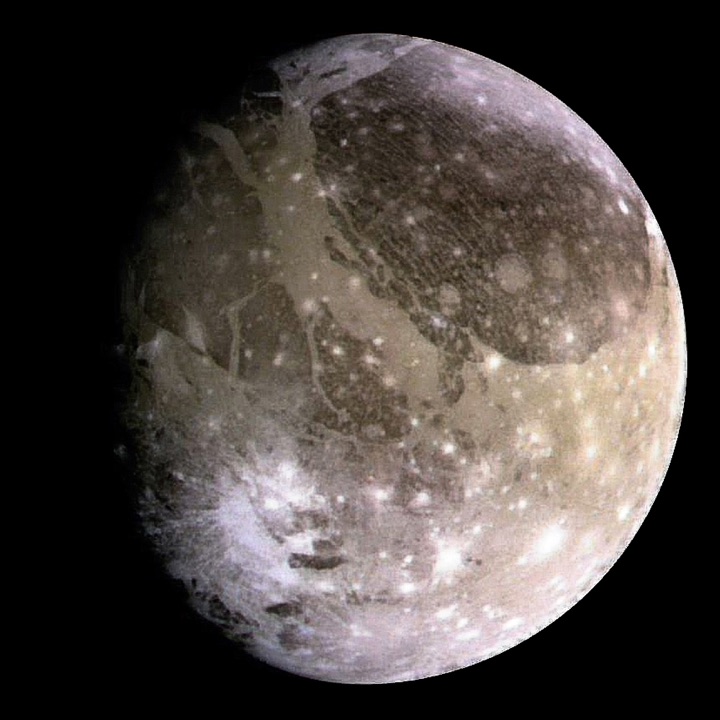
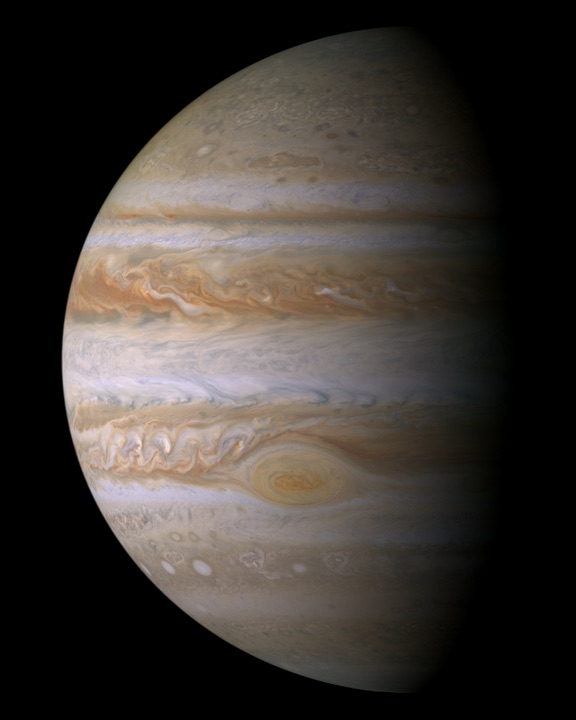 JupiterGas giant · Io orbits itZoom out →
Zoom out: star → system → (soon) galaxy arm, host black hole, and a real image of the host galaxy.
The portrait of Io is a real photograph (NASA/JPL/University of Arizona, Public domain). The "being there" scene and the size comparison are computed illustrations, not photographs.